


Domestic care providers: a workforce historically undervalued
Care is expected to be cheap the world over, in part because the global economy doesn’t have the ability to properly value care work; conventional economic measures—concepts such as supply, demand, and markets—fall woefully short. But the failures of imagination that have led to this moment don’t have to dictate that care work not be assigned monetary value going forward, or that we shouldn’t try.
- Angela Garbes, The Atlantic
Since the founding of this country, caregiving labor provided by women, especially immigrant women and women of color, has been seen as simultaneously essential and lacking inherent value. It is not a coincidence that, along with other marginalized groups whose livelihoods and lives are not valued, women of color have always been disadvantaged and disregarded in our society. The undervaluation of caregiving labor and the people who perform it has persisted well into modern times, and the underlying sexism and racism that underpin such cultural norms—rooted in the legacy of slavery and Jim Crow—have made it harder to develop a robust caregiving infrastructure over the decades.
- Ms. Magazine
Domestic workers are three times as likely to be living in poverty as other workers, and
almost three times as likely to either be in poverty or be above the poverty line but still without sufficient income to make ends meet. The vast majority (91.5%) of domestic workers are women and just over half (52.4%) are black, Hispanic, or Asian American/Pacific Islander women.
Though most (64.9% of) domestic workers are U.S.-born, they are more likely than other workers to have been born outside the U.S. and they tend to be older than other workers.
The typical (median) domestic worker is paid $12.01 per hour, much less than other workers (who are paid $19.97 per hour). Even when compared with demographically similar workers, domestic workers on average are paid just 74 cents for every dollar that their peers make.
Fewer than one in 10 domestic workers are covered by an employer-provided retirement plan and just one in five receives health insurance coverage through their job.
- Economic Policy Institute
By 2030, one in four Californians will be age 60 or older. The aging population in California will require increasing support from direct care workers to care for their essential needs, yet experts predict a shortage of between 600,000 and 3.2 million direct care workers by 2030.
Many of California’s direct care workers come from historically marginalized backgrounds:
80% are women, almost half (47%) are immigrants, and over three-quarters are people of color (38% Latino/x; 24% Asian, Native Hawaiian, and Pacific Islander; 12% Black; 3% other).
- California Health Care Foundation
A historic event in the American labor movement
The story of the UDW is, in one aspect, a dramatic playbook of how to organize a union. It will resonate with many people today as there has been a rise in interest and support for unions. A Gallup Poll in 2021 revealed that 68% of Americans approve of unions, the highest approval level since 1965. Labor organizing has grown in recent years. According to the National Labor Relations Board, in “fiscal Year 2022 (October 1–June 30), union representation petitions filed at the NLRB have increased 58%—up to 1,935 from 1,240 during the first three quarters of FY2021.
Significantly, the UDW is only the third union successfully founded by people of color. The first was the Brotherhood of Sleeping Car Porters founded by A. Phillip Randolph in 1925. Nearly 40 years later in 1962, Filipinos and Mexican Americans started the United Farmworkers Union.
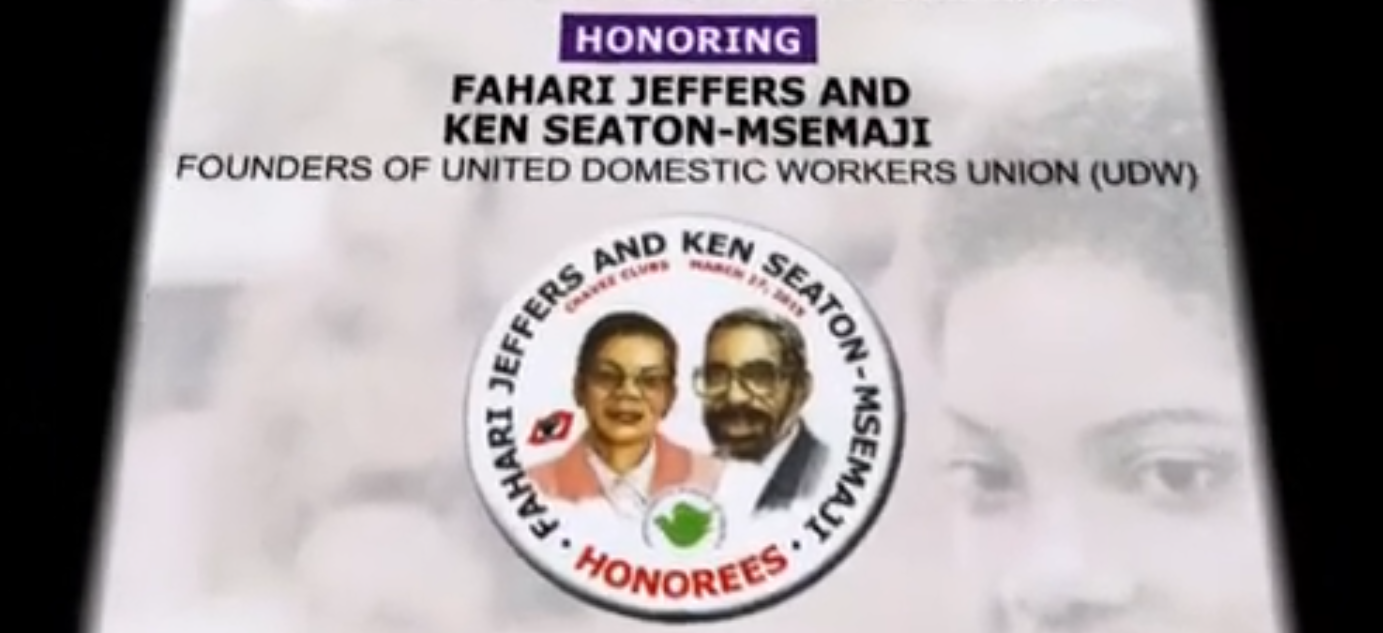
Watch this tribute to Fahari Jeffers and Ken Seaton-Msemaji:
For more information about the UDW go to: UDW.org